
6 Best EMF Meters for Home Testing in 2026
With wireless devices, smart meters, and 5G networks expanding rapidly, many families want to understand their electromagnetic field exposure at home. A quality EMF meter helps you identify radiation hotspots from WiFi routers, cell phones, power lines, and other sources so you can make informed decisions about your living environment. We selected these meters based on accuracy, ease of use, ability to detect all EMF types, and everyday testing by professionals and consumers.
1. TriField TF2 EMF Meter
The TriField TF2 stands out as the most user-friendly professional meter available. Made in the USA by AlphaLab, this device measures all three major EMF types: magnetic fields, electric fields, and radio frequency radiation up to 6GHz. The 3-axis magnetic sensor provides accurate readings regardless of how you hold the meter, eliminating the need to rotate it to find peak signals like cheaper alternatives require.
Why we recommend it: The TF2 updates readings four times per second with a clear analog bar display that makes fluctuations easy to spot. It covers most 5G frequencies, WiFi bands, cell phone signals, and smart meter radiation. The solid build quality and unlimited free US technical support make it reliable for long-term use.
Things to know: At around $200, it's more expensive than budget options, and it lacks data logging capability. The RF accuracy is rated at plus or minus 20 percent, which is fine for home testing but not laboratory precision.

TriField TF2 EMF Meter
The TriField TF2 stands out as the most user-friendly professional meter available. You can find it on Amazon.
View on AmazonAs an Amazon Associate, we earn from qualifying purchases.
2. GQ EMF-390 Multi-Field Meter
The GQ EMF-390 offers advanced features typically found in much more expensive equipment. This device includes data logging, RF spectrum analysis, and can display readings from all three EMF types simultaneously. The internal flash memory stores timestamped readings that you can download to a computer using the included software.
Why we recommend it: The spectrum analyzer helps identify specific frequency sources, making it easier to determine whether radiation is coming from a cell tower, WiFi router, or other device. It detects RF signals up to 10GHz, covering more 5G frequencies than most meters. The rechargeable design via USB eliminates battery replacement costs.
Things to know: The learning curve is steeper than simpler meters, and the display can feel cramped when navigating settings. Some users report mixed experiences with magnetic field accuracy compared to the electric and RF measurements.
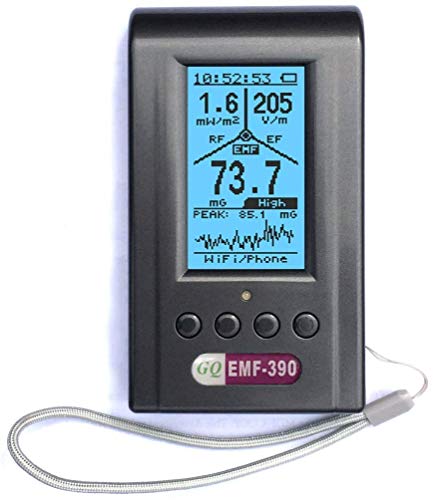
GQ EMF-390 Multi-Field Meter
The GQ EMF-390 offers advanced features typically found in much more expensive equipment. You can find it on Amazon.
View on AmazonAs an Amazon Associate, we earn from qualifying purchases.
3. Safe and Sound Pro II RF Meter
This RF-only meter specializes in detecting wireless radiation with exceptional accuracy. Third-party certified by Nemko Canada and individually calibrated, it covers 200 MHz to 8 GHz with true response detection. The audio function produces distinctive sounds for different wireless technologies, helping you identify specific radiation sources by ear.
Why we recommend it: Building biologists and EMF consultants regularly recommend this meter for professional assessments due to its certified accuracy of plus or minus 6 dB. The extremely high sensitivity can detect even weak signals, making it valuable for people with electromagnetic hypersensitivity. The OLED display shows peak, maximum, and average readings simultaneously.
Things to know: It only measures RF radiation, so you'd need a separate meter for magnetic and electric fields. The higher price point reflects its professional accuracy and certification. Battery life runs 12-15 hours on two AA batteries.

Safe and Sound Pro II RF Meter
This RF-only meter specializes in detecting wireless radiation with exceptional accuracy. You can find it on Amazon.
View on AmazonAs an Amazon Associate, we earn from qualifying purchases.
4. ERICKHILL RT-100S 3-in-1 EMF Detector
This budget-friendly option measures all three EMF types simultaneously with a clear color-coded display system. Green indicates safe levels, orange shows caution zones, and red alerts you to high radiation areas. The USB-C charging port and automatic shutoff help preserve battery life during extended use.
Why we recommend it: At under $50, it provides comprehensive EMF detection without breaking the budget. The simultaneous display of all three field types makes room scanning quick and efficient. The lightweight design and simple operation make it accessible for beginners who want immediate feedback about their environment.
Things to know: The build quality feels less substantial than professional meters, and some users question the accuracy of certain sensors. It may not detect all radio wave types that more expensive meters can identify.

ERICKHILL RT-100S 3-in-1 EMF Detector
This budget-friendly option measures all three EMF types simultaneously with a clear color-coded display system. You can find it on Amazon.
View on AmazonAs an Amazon Associate, we earn from qualifying purchases.
5. Cornet ED88T Plus2 Tri-Mode Meter
The Cornet ED88T Plus2 measures a broad frequency range from 100MHz to 8GHz, covering low frequency magnetic fields, electric fields, and RF radiation. This professional instrument includes histogram displays, sound signature analysis, and PC connectivity for detailed data tracking and logging.
Why we recommend it: It can detect spy cameras and wireless bugs in addition to standard EMF sources, making it useful for security-conscious users. The device stores 1000 readings automatically and measures in time intervals to record signal bursts. The sound signature analysis helps identify specific radiation sources.
Things to know: The interface is more complex than consumer meters, requiring time to learn all features. The higher price point puts it in professional territory, and the additional capabilities may be overkill for basic home testing needs.
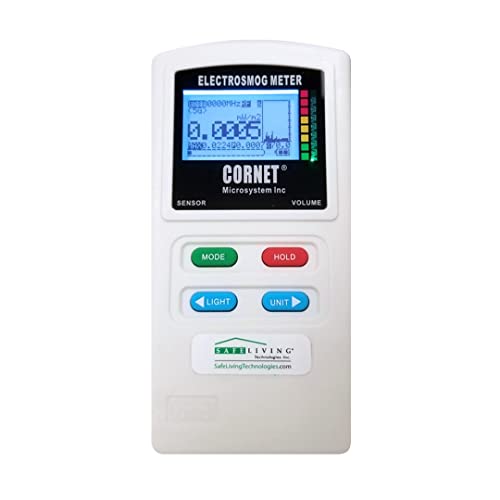
Cornet ED88T Plus2 Tri-Mode Meter
The Cornet ED88T Plus2 measures a broad frequency range from 100MHz to 8GHz, covering low frequency magnetic fields, electric fields, and RF radiation. You can find it on Amazon.
View on AmazonAs an Amazon Associate, we earn from qualifying purchases.
6. Latnex HF-B3G High Frequency Meter
This premium detector focuses on measuring radiation from cell phone towers, smart meters, microwaves, Bluetooth devices, and WiFi modems. It offers both beginner and advanced operation modes with tri-axial sensors for comprehensive detection. The device comes with an aluminum carrying case and provides approximately 15 hours of battery life.
Why we recommend it: The frequency range of 50MHz to 3.5GHz covers most common wireless devices while maintaining professional accuracy. The alarm and buzzer functions alert you to high radiation levels, and the data memory storage lets you track readings over time. The digital clock feature helps timestamp measurements.
Things to know: The focus on high-frequency RF means it doesn't measure low-frequency magnetic fields from power lines or electrical wiring. The professional features and aluminum case justify the higher cost but may be unnecessary for casual home testing.

Latnex HF-B3G High Frequency Meter
This premium detector focuses on measuring radiation from cell phone towers, smart meters, microwaves, Bluetooth devices, and WiFi modems. You can find it on Amazon.
View on AmazonAs an Amazon Associate, we earn from qualifying purchases.
How to Choose the Right EMF Meter
- Determine your measurement needs: If you want comprehensive testing, choose a meter that detects all three EMF types (magnetic, electric, and RF). For RF-only concerns, an RF-specific meter may be more accurate.
- Consider your technical comfort level: Beginners should prioritize simple operation and clear displays, while advanced users might want data logging, spectrum analysis, and PC connectivity features.
- Check frequency coverage: Ensure the meter covers the frequencies you're concerned about. For 5G detection, look for meters that measure up to 8-10GHz rather than older models limited to 3-6GHz.
- Evaluate accuracy requirements: Home testing typically doesn't require laboratory precision, but if you need professional documentation, invest in a third-party certified meter with known accuracy specifications.
- Factor in long-term costs: Consider whether you prefer rechargeable models or replaceable batteries, and whether the manufacturer offers ongoing technical support for interpreting readings.
The right EMF meter empowers you to make informed decisions about your family's electromagnetic exposure. Start with comprehensive testing to identify your home's radiation sources, then focus on the areas and devices that matter most to your health and peace of mind.