
A Complete Guide to Non-Toxic Blenders for 2026
Most blenders rely on plastic containers that can leach chemicals into food, especially when processing hot ingredients or acidic fruits. Health experts at Zenda Guide and Organic Authority consistently highlight that the safest blender options prioritize glass and stainless steel surfaces that contact food, avoiding BPA, microplastics, and other potentially harmful compounds. These materials resist scratching, staining, and chemical degradation while offering superior durability for daily blending tasks.
1. Vitamix E310 with Stainless Steel Container
This premium blender setup combines Vitamix's powerful motor base with a 48-ounce stainless steel container sold separately. The stainless steel jar eliminates plastic contact with food while maintaining the brand's reputation for crushing frozen fruits, making smooth soups, and handling tough ingredients with ease.
Why it stands out: Zenda Guide gives this combination a 9.1/10 score for reduced plastic contact, noting it offers the "best premium upgrade with reduced plastic". The non-reactive stainless steel resists flavors, odors, and stains, while Organic Authority testing confirms it performs consistently with tough ingredients like nuts and seeds. The precision-cut stainless steel blades handle everything from frozen smoothies to hot soups.
Things to know: The stainless steel container costs extra beyond the base unit, making this the most expensive setup. You cannot see inside while blending, though the included tamper helps manage thick mixtures. The lid is still BPA-free plastic, though food contact with the lid is minimal during normal use.

Vitamix E310 with Stainless Steel Container
This premium blender setup combines Vitamix's powerful motor base with a 48-ounce stainless steel container sold separately. You can find it on Amazon.
View on AmazonAs an Amazon Associate, we earn from qualifying purchases.
2. Waring Commercial BB300S
This bar blender designed for commercial use includes a stainless steel jar as part of the standard configuration, eliminating the need for separate upgrades. The 48-ounce stainless steel container pairs with simple toggle controls designed for durability and consistent performance in high-use environments.
Why it stands out: Zenda Guide rates this model 8.5/10 for being the "best option with stainless steel jar included", offering reduced plastic contact without requiring separate purchases. The commercial-grade design prioritizes durability over advanced features, making it ideal for straightforward blending tasks like smoothies and frozen drinks.
Things to know: The simple controls may feel limited compared to home blenders with variable speed settings, and it performs best with liquid-heavy blends rather than thick mixtures. The commercial styling may not match home kitchen aesthetics, and you should confirm the Amazon listing includes the stainless steel jar configuration.

Waring Commercial BB300S
This bar blender designed for commercial use includes a stainless steel jar as part of the standard configuration, eliminating the need for separate upgrades. You can find it on Amazon.
View on AmazonAs an Amazon Associate, we earn from qualifying purchases.
3. Oster Pro 1200 with Glass Jar
This affordable blender features a borosilicate glass jar that eliminates plastic contact with food while providing visibility during blending. The 6-cup capacity handles large batches, while the dual-direction blade technology improves blending efficiency for both smooth and chunky textures.
Why it stands out: Zenda Guide identifies this as the "best value glass blender" with an 8.3/10 rating, offering glass construction at a budget-friendly price point. The borosilicate glass resists thermal shock and staining, while the removable blade assembly simplifies cleaning. Multiple reviewers praise its performance with frozen fruits and everyday smoothie ingredients.
Things to know: The glass jar is heavier than plastic alternatives and requires careful handling to prevent breakage. Some plastic components like the smoothie cup and lid parts still contact food, though the main blending chamber remains glass. The motor may struggle with very thick mixtures compared to more powerful models.
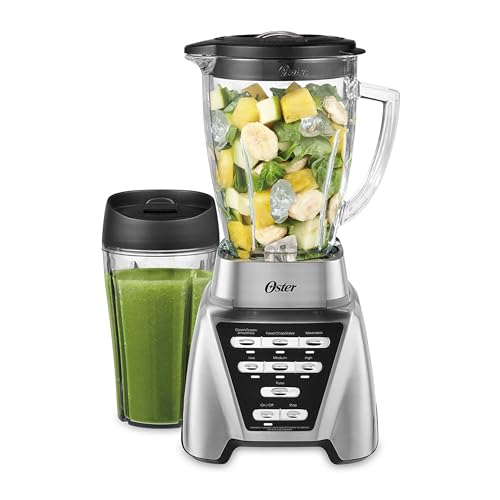
Oster Pro 1200 with Glass Jar
This affordable blender features a borosilicate glass jar that eliminates plastic contact with food while providing visibility during blending. You can find it on Amazon.
View on AmazonAs an Amazon Associate, we earn from qualifying purchases.
4. Beast Stainless Steel Personal Blender
This compact personal blender features a fully stainless steel blending vessel that doubles as a drinking cup and storage container. The 500mL Mini size offers the most plastic-free design in Beast's lineup, with the stainless steel container connecting directly to the powerful base.
Why it stands out: Organic Authority testing confirms this model "effortlessly handles tough ingredients" while eliminating plastic contact with food through its stainless steel vessel. The container serves multiple purposes as a blender jar, storage vessel, and travel cup with included lids and straws. The compact design fits easily in small kitchens while delivering powerful blending performance.
Things to know: The 500mL capacity limits batch sizes to single servings, and you cannot see inside the stainless steel container during blending. Thicker ingredients may require stopping to stir manually. The larger Mighty and Mega sizes include plastic accessories that increase food contact, making the Mini the only truly minimal-plastic option.
How to Choose the Right Non-Toxic Blender
- Prioritize jar materials: Glass and stainless steel containers eliminate plastic contact with food, with glass offering visibility and stainless steel providing maximum durability and temperature resistance.
- Consider your blending needs: Personal blenders work well for single servings, while full-size models handle family batches and tougher ingredients like frozen fruits and vegetables.
- Check all food-contact points: Even glass and stainless steel blenders may use plastic lids, seals, or accessories, so review the complete material list for components that touch your food.
- Evaluate motor power: Motors with higher wattage handle tough ingredients more effectively, reducing wear on both the blender and container materials over time.
- Factor in maintenance: Glass containers show stains and scratches less than plastic but require more careful handling, while stainless steel offers maximum durability but eliminates blending visibility.
Choosing a non-toxic blender means prioritizing materials that keep harmful chemicals out of your smoothies and soups while delivering the blending power you need for daily food preparation.