
7 Best Eco-Friendly Dental Products for 2026: Zero-Waste Oral Care That Actually Works
Making the switch to eco-friendly dental products is one of the simplest ways to reduce your personal plastic footprint. Americans throw away approximately 1 billion plastic toothbrushes every year, and most conventional dental products come wrapped in non-recyclable packaging. The good news: sustainable alternatives now match or exceed the performance of traditional options, combining effective cleaning with genuine environmental responsibility. We evaluated the leading eco-friendly dental products based on cleaning effectiveness, material sustainability, packaging impact, certifications, and real user feedback to help you build a zero-waste oral care routine.
1. MABLE Basics Bamboo Toothbrush
MABLE Basics features a 100% compostable, FSC-certified bamboo handle paired with plant-based bristles derived from castor bean oil rather than petroleum-based nylon. The toothbrush is designed to stand upright for storage, which helps keep bristles dry and extends the brush's lifespan. It comes in minimal, recyclable packaging and is suitable for children, adults, and people with varying dexterity needs.
Why we recommend it: This is the best overall choice because it combines genuine sustainability with affordability and effectiveness. The plant-based bristles offer superior eco-credentials compared to standard nylon, and the self-standing design is a practical feature that prevents moisture buildup. It's also one of the lowest-priced high-quality sustainable brushes available.
Things to know: While the bamboo handle is fully compostable, you'll need to snap off the bristle head before composting, as the bristles themselves are plant-based nylon and should be disposed of separately. The straight handle design may not provide quite as much access to back molars as curved alternatives.
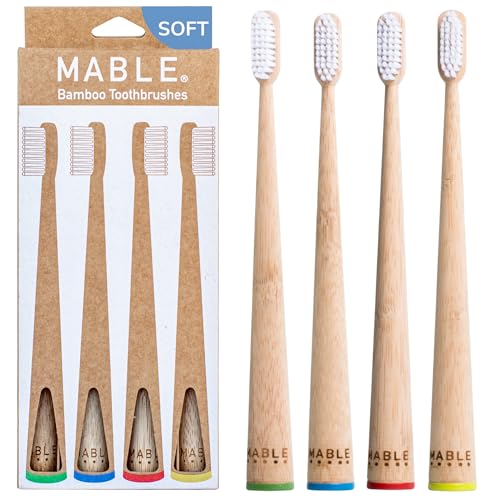
MABLE Basics Bamboo Toothbrush
MABLE Basics features a 100% compostable, FSC-certified bamboo handle paired with plant-based bristles derived from castor bean oil rather than petroleum-based nylon. You can find it on Amazon.
View on AmazonAs an Amazon Associate, we earn from qualifying purchases.
2. Greenzla Bamboo Toothbrushes (12-Pack)
Greenzla offers a 12-pack of bamboo toothbrushes with charcoal-infused soft bristles that provide effective stain removal and whitening benefits. The handles are made from sustainably sourced bamboo with an ergonomic grip, and each brush comes in individual paper sleeves for clean storage and travel. The entire package is plastic-free and fully recyclable.
Why we recommend it: This is the best value option and ideal for travel or families. Testing showed that Greenzla's charcoal-infused bristles have a noticeable positive whitening effect compared to standard nylon bristles, and the bristles remained securely attached after three months of twice-daily use. The 12-pack ensures consistent quality across all brushes, and the included travel cases make it perfect for extended trips.
Things to know: The charcoal bristles, while effective for stain removal, can be slightly abrasive if you brush aggressively or have sensitive enamel. Dentists typically recommend soft bristles for daily use, so be mindful of your brushing pressure. The bristles are standard nylon rather than fully plant-based, though the bamboo handle remains fully compostable.
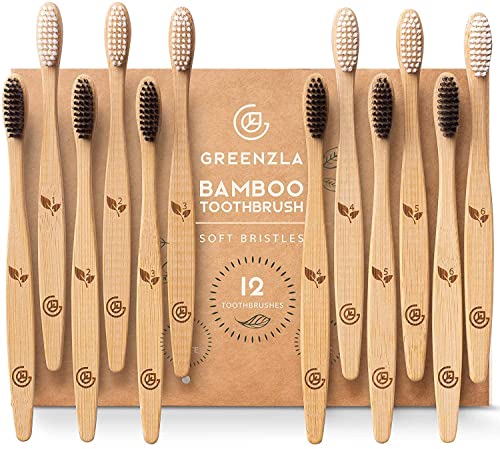
Greenzla Bamboo Toothbrushes (12-Pack)
Greenzla offers a 12-pack of bamboo toothbrushes with charcoal-infused soft bristles that provide effective stain removal and whitening benefits. You can find it on Amazon.
View on AmazonAs an Amazon Associate, we earn from qualifying purchases.
3. Brush with Bamboo (4-Pack)
Brush with Bamboo stands out as one of the few truly 100% biodegradable toothbrush options on the market. The bristles are made from castor bean oil rather than petroleum-based nylon, and the packaging is also 100% plant-based. The ergonomic handle provides a comfortable grip, and the entire brush breaks down naturally in compost without leaving any plastic residue.
Why we recommend it: If you want the most eco-conscious choice possible, this is it. The 100% plant-based bristles mean the entire toothbrush is genuinely compostable, with zero plastic or nylon components. This is one of the few options where you don't need to separate bristles from the handle before composting.
Things to know: Brush with Bamboo comes at a higher price point than standard bamboo toothbrushes, making it less budget-friendly for large families. The plant-based bristles may wear slightly faster than traditional nylon, so you may need to replace your brush every 2-3 months as recommended. Availability can be more limited than mass-market alternatives.
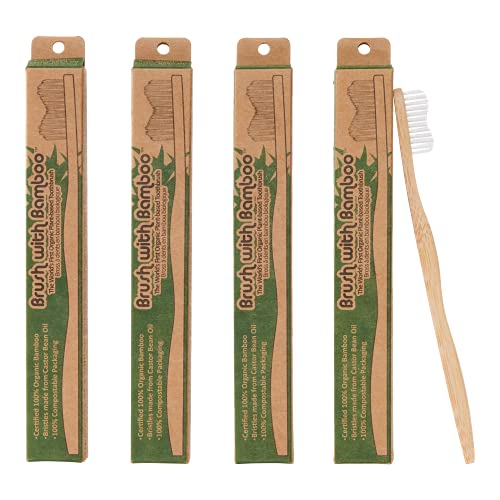
Brush with Bamboo (4-Pack)
Brush with Bamboo stands out as one of the few truly 100% biodegradable toothbrush options on the market. You can find it on Amazon.
View on AmazonAs an Amazon Associate, we earn from qualifying purchases.
4. Preserve Eco-Friendly Adult Toothbrush
Preserve makes toothbrushes entirely from 100% recycled #5 plastics, including post-consumer yogurt containers. The curved handle provides better access to molars than straight designs, and the ultra-soft bristle option is specifically designed for gentle cleaning and minimal gum irritation. Preserve has been a Certified B Corporation since 2011 and is confirmed cruelty-free by PETA. The brand also operates a takeback program to promote recycling.
Why we recommend it: If you prefer a recycled plastic option over bamboo or metal, Preserve is the most ethical choice. The ultra-soft bristles genuinely protect gum tissue, and testing showed no bleeding or irritation even with slightly aggressive brushing. The curved handle design is ergonomically superior for reaching back teeth. The company's B Corp certification and takeback program demonstrate genuine commitment to sustainability beyond just the product itself.
Things to know: While made from recycled plastic, this toothbrush is not compostable or biodegradable like bamboo options. The bristles will eventually wear out and need replacement, and the entire brush will eventually end up in a landfill. However, the recycled content and takeback program make it a better choice than virgin plastic toothbrushes. The bristles are not plant-based, so it's less suitable for vegans seeking fully plant-derived products.

Preserve Eco-Friendly Adult Toothbrush
Preserve makes toothbrushes entirely from 100% recycled #5 plastics, including post-consumer yogurt containers. You can find it on Amazon.
View on AmazonAs an Amazon Associate, we earn from qualifying purchases.
5. Singular Care Metal Toothbrush with Replaceable Heads
Singular Care features a medical-grade stainless steel handle backed by a lifetime warranty, with only the TPU replacement heads needing periodic replacement. The weighted handle provides excellent control during brushing, and the design is sleek and modern. You can subscribe to receive four replacement heads annually and save 15% on the subscription. According to the brand, this approach cuts plastic waste by 82% compared to traditional disposable toothbrushes.
Why we recommend it: This is the best option for long-term sustainability and durability. The lifetime-warranted stainless steel handle means you're investing in a tool that will last decades, and the replaceable heads significantly reduce overall plastic consumption. The subscription model ensures you always have fresh heads without waste.
Things to know: Singular Care has a high upfront cost that may feel prohibitive compared to disposable options. However, the investment pays off over time if you keep the handle for years. The replacement heads still contain some plastic (TPU), so it's not completely zero-waste, though the reduction is substantial. The metal handle may feel cold or heavy for some users, and it's not suitable for people with certain metal sensitivities.
6. Compostable Dental Floss (Silk or Plant-Based)
Compostable dental floss represents a major upgrade from conventional plastic floss, which persists in landfills and oceans indefinitely. Options include silk floss coated with plant-based wax (such as beeswax or candelilla wax) and plant-based alternatives made from bamboo fiber or other natural materials. These products come in cardboard or glass containers rather than plastic spools, and the floss itself breaks down naturally in compost. Brands like Kaylaan and others featured in eco-friendly dental guides offer these alternatives.
Why we recommend it: Conventional plastic floss is one of the most overlooked sources of plastic waste in oral care routines. Compostable alternatives perform just as well for cleaning between teeth while eliminating this persistent waste stream. The natural wax coatings provide smooth gliding without synthetic chemicals, and the cardboard or glass packaging eliminates additional plastic waste.
Things to know: Silk floss is not vegan, as it comes from silkworm cocoons. Plant-based alternatives are available for vegans but may be slightly less smooth than silk. Some people find the transition from plastic floss to compostable options requires a brief adjustment period. Availability varies by region, and these products typically cost slightly more than conventional plastic floss. Always compost the floss itself, not the container, and check your local composting facility's guidelines.
7. Toothpaste Tablets (Solid Toothpaste)
Toothpaste tablets are a zero-waste alternative to traditional toothpaste tubes, offering the same cleaning power in a compact, plastic-free form. You chew or dissolve the tablet in your mouth before brushing, and they typically contain natural ingredients like baking soda, clay, plant extracts, and essential oils. Brands like Kaylaan offer toothpaste tablets with eco-friendly packaging, and they're formulated to be biodegradable. A single container of tablets replaces multiple tubes of conventional toothpaste.
Why we recommend it: Toothpaste tablets eliminate the plastic tube waste entirely while providing effective cleaning in a more concentrated form. They're lightweight and compact, making them ideal for travel. The natural ingredient formulations align with the broader eco-friendly dental care philosophy, and many tablets include whitening agents like activated charcoal or mineral-based whiteners without harsh synthetic chemicals.
Things to know: The chewing step takes some adjustment if you're accustomed to traditional toothpaste. Some people find the texture or taste unfamiliar at first, though most adapt within a week or two. Tablets may not provide the same minty flavor intensity as conventional toothpaste, though many brands offer pleasant herbal or citrus alternatives. They work best when you have access to water for rinsing, so they may be less convenient in situations where water isn't readily available. Storage should be in a cool, dry place to prevent moisture absorption.
How to Choose the Right Eco-Friendly Dental Products
- Verify material sustainability: Look for bamboo toothbrushes with FSC certification, plant-based bristles made from castor oil or similar materials, and floss made from silk or plant fibers rather than nylon. Check that packaging is cardboard, glass, or compostable rather than plastic.
- Check bristle type based on your needs: Soft bristles are recommended for daily use and sensitive gums. Charcoal-infused bristles offer whitening benefits but can be slightly abrasive, so use them with gentle brushing technique. Plant-based bristles are more sustainable than nylon but may wear slightly faster.
- Consider your composting access: If you have home composting or access to a commercial composting facility, bamboo toothbrushes and compostable floss are ideal. If not, recycled plastic options like Preserve or durable metal toothbrushes that last for years may be more practical.
- Look for third-party certifications: Seek products with FSC certification for bamboo, B Corp certification for ethical manufacturing, PETA cruelty-free confirmation, or organic certifications for toothpaste tablets. These indicate genuine commitment to sustainability beyond marketing claims.
- Balance upfront cost with long-term impact: Bamboo toothbrushes and compostable floss have minimal upfront cost but require frequent replacement. Metal toothbrushes and subscription-based replacement systems cost more initially but reduce overall waste and long-term spending. Choose based on your budget and waste reduction priorities.
Switching to eco-friendly dental products is one of the easiest ways to reduce plastic waste without sacrificing oral health. Whether you choose bamboo toothbrushes, compostable floss, or toothpaste tablets, each product eliminates persistent plastic waste while delivering effective cleaning. Start with one or two changes, then gradually build a complete zero-waste oral care routine that works for your lifestyle and values.