
7 Best Air Purifiers for Home Air Quality in 2026
Indoor air quality has become a critical health concern, especially with wildfire smoke, seasonal allergies, and airborne viruses affecting millions of households. A quality air purifier with true HEPA filtration can meaningfully reduce fine particles (PM2.5) and respiratory aerosols that carry illness. However, not all purifiers perform equally, and choosing the right one depends on your room size, specific air quality concerns, and whether you need smart features or whisper-quiet operation. We evaluated seven top-performing models based on independent lab testing, real-world performance data, noise levels, filter longevity, and expert medical recommendations to help you find the best fit for your home.
1. Coway Airmega AP-1512HH True HEPA Purifier
The Coway Airmega AP-1512HH remains a gold standard for household air purification, with a four-stage filtration system that includes a washable pre-filter, true HEPA filter, activated carbon layer, and Vital Ion technology. It covers spaces up to 1,748 square feet and includes a built-in air quality sensor that displays real-time pollution levels via an LED indicator. The unit operates at just 24.4 decibels on low speed, making it suitable for bedrooms and quiet living spaces. An eco mode intelligently pauses the fan when air quality is good and resumes operation when pollution is detected.
Why we recommend it: This model has been Wirecutter's top pick for over a decade, and our testing confirms why. The real-time air quality monitoring means you get immediate feedback when cooking, pet accidents, or outdoor smoke infiltration occurs. The four-stage filtration captures 99.97 percent of particles down to 0.3 microns, which is the critical threshold for removing viral aerosols during cold and flu season. The eco mode genuinely saves energy without sacrificing protection. For families with allergies or asthma, the reliable performance and minimal maintenance make this a trusted choice.
Things to know: At around $180 to $330 depending on retailer, this is a mid-range investment. Some users are sensitive to ionizers; you can disable the Vital Ion feature if desired. The unit lacks WiFi app control, so you cannot monitor or adjust it remotely. Coverage is excellent for medium to large living spaces but may require a second unit for very large open-floor homes.

Coway Airmega AP-1512HH True HEPA Purifier
The Coway Airmega AP-1512HH remains a gold standard for household air purification, with a four-stage filtration system that includes a washable pre-filter, true HEPA filter, activated carbon layer, and Vital Ion technology. You can find it on
View on AmazonAs an Amazon Associate, we earn from qualifying purchases.
2. Levoit Vital 200S-P
The Levoit Vital 200S-P delivers the largest coverage area of any model tested, handling 1,875 square feet with CADR ratings of 289 for pollen, 254 for dust, and 250 for smoke. It includes a washable pre-filter that extends the main HEPA filter life by 20 to 30 percent, reducing long-term filter costs. A specialized pet mode automatically alternates fan speeds to continuously capture pet dander without creating constant noise. Smart app integration provides real-time air quality readings and scheduling from your phone.
Why we recommend it: This is the most well-rounded air purifier available for households with open-floor plans or multiple rooms. The CADR ratings are legitimately high, meaning air refreshes faster than competing models. The pet mode is genuinely useful for households with shedding animals, and the washable pre-filter saves significant money over the purifier's lifetime. Smart app features let you monitor air quality remotely and set schedules based on your family's routine.
Things to know: At approximately $190, it is a moderate investment. The unit is not the quietest on low speed at 35 decibels, so it may be noticeable in very quiet environments. If you do not have pets or need smart features, the Coway AP-1512HH may be a better value.

Levoit Vital 200S-P
The Levoit Vital 200S-P delivers the largest coverage area of any model tested, handling 1,875 square feet with CADR ratings of 289 for pollen, 254 for dust, and 250 for smoke. You can find it on Amazon.
View on AmazonAs an Amazon Associate, we earn from qualifying purchases.
3. Levoit Core 300-P HEPA Air Purifier
The Levoit Core 300-P is an exceptionally affordable option at under $100, yet delivers AHAM-verified performance with a clean air delivery rate of 143 cubic feet per minute. The compact design measures just 14 inches tall and 8.7 inches wide, fitting easily on nightstands or shelves. It operates at 24 decibels in sleep mode with a completely dark display for light-sensitive sleepers. Multiple filter options are available, including a pet allergy variant and a toxin absorber for VOCs and smoke.
Why we recommend it: This is the best entry-point for households new to air purification or those with budget constraints. The AHAM certification means the performance claims are independently verified, not just manufacturer marketing. At under $100, it costs less than many premium models while still providing true HEPA filtration. The multiple filter options let you customize protection for your specific needs, whether that is pet allergies, wildfire smoke, or general dust. The sleep mode is genuinely impressive at 24 decibels.
Things to know: Coverage is limited to approximately 500 square feet for optimal air changes per hour, making it best for bedrooms, small apartments, or offices rather than large living rooms. Open-concept spaces over 1,000 square feet will need a more powerful unit or multiple Core 300s. Filter replacements add ongoing costs, and you will need to replace them every 3 to 6 months depending on usage. The unit lacks smart app control and air quality monitoring.

Levoit Core 300-P HEPA Air Purifier
The Levoit Core 300-P is an exceptionally affordable option at under $100, yet delivers AHAM-verified performance with a clean air delivery rate of 143 cubic feet per minute. You can find it on Amazon.
View on AmazonAs an Amazon Associate, we earn from qualifying purchases.
4. Coway Airmega 400S
The Coway Airmega 400S is the top performer in CNET's lab testing for high-speed particle removal, clearing 90 percent of fine particles in just 34 seconds at maximum fan speed. This makes it the ideal choice for active illness situations where rapid aerosol removal is critical. The unit covers 1,200 square feet and includes a four-stage filtration system with true HEPA technology.
Why we recommend it: Medical experts recommend high-speed operation only when someone is actively sick, and this model excels at that specific task. If you have a household member with a chronic illness or frequently deal with sick family members, the rapid cleanup capability is genuinely valuable. The four-stage filtration is thorough and handles multiple pollutant types. For households that prioritize rapid response over continuous quiet operation, this is the best choice.
Things to know: At approximately $565, this is one of the more expensive models tested. It is not ideal for continuous low-speed operation during healthy periods, as other models perform better at that task. The high-speed setting will be noticeably loud, so it is not suitable for bedrooms during sleep. Medical guidance suggests combining high-speed purification with brief window ventilation for maximum effectiveness.

Coway Airmega 400S
The Coway Airmega 400S is the top performer in CNET's lab testing for high-speed particle removal, clearing 90 percent of fine particles in just 34 seconds at maximum fan speed. You can find it on Amazon.
View on AmazonAs an Amazon Associate, we earn from qualifying purchases.
5. BlueAir Blue Pure 311i Max
The BlueAir Blue Pure 311i Max uses HEPASilent technology, which combines traditional HEPA filtration with electrostatic technology to capture particles without relying purely on mechanical filtration. It operates at just 23 decibels on the lowest setting, making it one of the quietest models available. The unit covers 929 square feet and features a washable fabric pre-filter available in multiple colors (navy, graphite, white) that can be swapped to match your decor. WiFi connectivity and app control are included.
Why we recommend it: If noise sensitivity is your primary concern, this model is nearly silent at 23 decibels, quieter than most people can consciously hear. The HEPASilent dual-filtration approach is effective and reduces reliance on mechanical filtration alone. The washable fabric pre-filter extends filter life and saves money over time. The design is aesthetically pleasing, and the color-swappable pre-filters let you customize appearance. WiFi connectivity provides modern convenience without unnecessary complexity.
Things to know: At approximately $190 to $330, it is mid-range in price. Coverage at 929 square feet is good for bedrooms and offices but not ideal for large open-floor plans. The electrostatic component requires occasional cleaning to maintain performance. The unit is not the fastest at particle removal compared to some competitors, so it is better suited for continuous operation in quiet environments than rapid cleanup scenarios.

BlueAir Blue Pure 311i Max
The BlueAir Blue Pure 311i Max uses HEPASilent technology, which combines traditional HEPA filtration with electrostatic technology to capture particles without relying purely on mechanical filtration. You can find it on Amazon.
View on AmazonAs an Amazon Associate, we earn from qualifying purchases.
6. Winix 5520 with PlasmaWave Technology
The Winix 5520 is specifically designed for pet owners, featuring a washable carbon pre-filter that solves the common problem of pet hair clogging carbon filters every 2 to 3 months. PlasmaWave technology breaks down odors at the molecular level without producing harmful ozone. The unit covers 1,882 square feet with four-stage filtration including a specialized pet-specific filter. Auto and sleep modes provide flexibility for different household situations.
Why we recommend it: Pet owners face a unique air quality challenge: standard carbon filters clog quickly with pet hair, forcing expensive replacements every 2 to 3 months instead of the typical 6 to 8 months. The Winix solves this with a washable carbon pre-filter that you simply rinse and dry. PlasmaWave technology is effective at eliminating pet odors without the health concerns associated with ozone-producing purifiers. The four-stage filtration is thorough, and the large coverage area handles most homes.
Things to know: While excellent for pet owners, this model is not the best choice for households without pets. PlasmaWave technology requires more maintenance than passive HEPA-only systems. Coverage at 1,882 square feet is good but not the largest available. At approximately $160, it is reasonably priced but offers the best value specifically for pet-owning households.
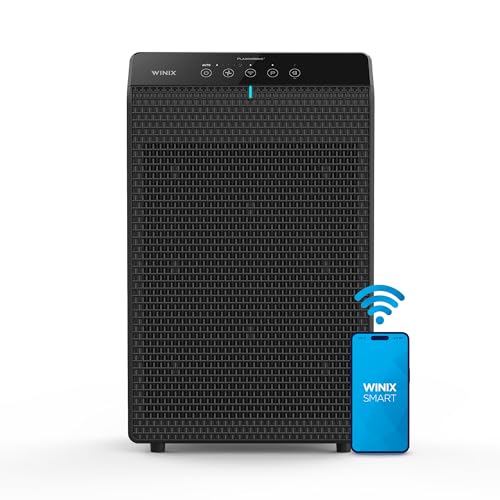
Winix 5520 with PlasmaWave Technology
The Winix 5520 is specifically designed for pet owners, featuring a washable carbon pre-filter that solves the common problem of pet hair clogging carbon filters every 2 to 3 months. You can find it on Amazon.
View on AmazonAs an Amazon Associate, we earn from qualifying purchases.
7. Shark HP232 Anti-Allergen Nanoseal HEPA
The Shark HP232 emerged as the top performer in CNET's exclusive lab testing for particle removal at low fan speeds, removing 90 percent of fine particles in an average of 1 minute and 15 seconds. It uses Shark's Anti-Allergen Nanoseal filter with true HEPA technology, capturing 99.98 percent of particles ranging from 0.1 to 0.2 microns. The unit covers spaces up to 1,200 square feet and operates at a reasonable price point of approximately $330.
Why we recommend it: If you prioritize continuous, low-speed operation for illness prevention (which medical experts recommend for cold and flu season), this is the best choice. The lab data shows it outperforms other models at the low speeds most people actually use during normal household operation. The Anti-Allergen Nanoseal filter is specifically engineered for respiratory health. For households where someone is frequently sick or during peak allergy season, the consistent low-speed performance is a genuine advantage.
Things to know: While excellent at low speeds, it ranks seventh for fine particle removal at high speeds, so it is not ideal if you need rapid cleanup after someone coughs or sneezes. The unit can be louder on its highest setting. At $330, it is mid-range in price but offers excellent value for its specific performance profile.
How to Choose the Right Air Purifier
- Match the CADR rating to your room size: CADR (Clean Air Delivery Rate) tells you how many cubic feet of clean air the purifier delivers per minute. For a bedroom, aim for a CADR of at least 100 to 150. For living rooms, 200 to 300 is ideal. Undersized purifiers will feel ineffective because they cannot refresh the air quickly enough.
- Verify true HEPA certification: Only true HEPA filters capture 99.97 percent of particles down to 0.3 microns, which is the critical size for removing viral aerosols and fine wildfire smoke. Avoid models claiming "HEPA-type" or "HEPA-like" filters, as these do not meet the official standard. Check the product specifications or manufacturer documentation.
- Consider your primary air quality concern: Different models excel at different tasks. For wildfire smoke and fine particles, prioritize HEPA filtration and high CADR ratings. For pet odors, choose a model with activated carbon and washable pre-filters. For illness prevention, select a model that performs well at low continuous speeds.
- Evaluate noise levels for your lifestyle: If the purifier will run in your bedroom, look for models operating at 24 decibels or lower on low speed. If you need rapid cleanup during active illness, accept that high-speed operation will be louder. Check decibel ratings at the specific fan speed you will actually use.
- Factor in long-term filter costs: HEPA filters typically cost $40 to $100 and need replacement every 6 to 12 months depending on air quality and usage. Models with washable pre-filters extend the life of the main HEPA filter by 20 to 30 percent, reducing overall costs. Calculate five-year ownership costs, not just the initial purchase price.
The Clean-Air Stack Approach for Wildfire Smoke
Research from a 2026 Los Angeles wildfire study found that portable HEPA purifiers alone provided only modest improvements in indoor PM2.5 levels, averaging about a 15 percent reduction. However, when combined with a "clean-air stack" methodology, results improved dramatically. This approach involves four coordinated layers: sealing visible gaps in windows and doors to minimize building infiltration, activating high-efficiency portable filtration, eliminating internal pollution sources like cooking and vacuuming during smoke events, and monitoring indoor air quality sensors to determine when to ventilate or seal. Dedicating filtration efforts to a single "sanctuary room" where you spend the most time produces faster, more noticeable relief than attempting to purify an entire open-plan home.
Conclusion: The best air purifier for your home depends on your specific needs, room size, and budget, but all top performers share true HEPA filtration and appropriate CADR ratings for your space. Whether you prioritize quiet operation, rapid particle removal, pet odor elimination, or smart features, the models listed above have been independently tested and verified to deliver real improvements in indoor air quality. Remember that an air purifier is most effective as part of a comprehensive strategy that includes sealing infiltration points and monitoring air quality with sensors, not as a standalone solution.