
6 Best Under-Sink Water Filters for 2026: RO vs Non-RO Systems
Under-sink water filters offer a permanent solution for clean drinking water without taking up counter space or requiring constant pitcher refills. Whether you're dealing with chlorine taste, lead concerns, or dissolved contaminants, the right under-sink system can transform your tap water quality. We evaluated systems based on contaminant reduction capabilities, installation complexity, maintenance requirements, and long-term value to find the best options for different household needs.
1. Clearly Filtered Under Sink Water Filter System
This non-RO system uses advanced multi-stage filtration to target chlorine, heavy metals, and many chemical contaminants without requiring a drain connection or producing wastewater. The system connects directly to your existing faucet and maintains high flow rates while addressing common water quality concerns.
Why we recommend it: Offers substantial contaminant reduction without the complexity of RO installation. No wastewater production makes it environmentally friendly, and the simple design means fewer components to maintain. Represents the non-RO approach for those who refuse wastewater completely.
Things to know: While effective against many contaminants, it may not match RO performance on dissolved minerals and certain stubborn contaminants like fluoride or nitrates. Filter cartridges are proprietary and replacement costs can add up over time.

Clearly Filtered Under Sink Water Filter System
This non-RO system uses advanced multi-stage filtration to target chlorine, heavy metals, and many chemical contaminants without requiring a drain connection or producing wastewater. You can find it on Amazon.
View on AmazonAs an Amazon Associate, we earn from qualifying purchases.
2. APEC Water Systems ROES-50 Reverse Osmosis System
This traditional tank-based RO system represents the classic approach to home water purification, using a five-stage filtration process including sediment, carbon, and membrane filtration with a storage tank for consistent water availability. The system targets a wide range of dissolved contaminants that other filtration methods struggle with.
Why we recommend it: Proven RO technology with comprehensive contaminant removal at a lower upfront cost than tankless systems. The storage tank ensures water is always available, and replacement filters are widely available and competitively priced. Represents the standard tank-based RO approach.
Things to know: Produces wastewater and requires significant cabinet space for the storage tank. Water has a flat taste unless you add a remineralization stage, and flow rate from the dedicated faucet is slower than direct-connect systems.
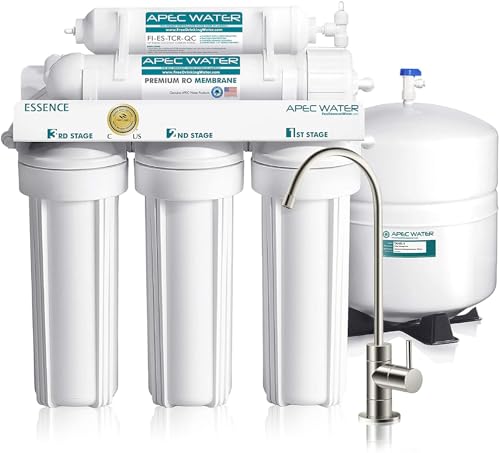
APEC Water Systems ROES-50 Reverse Osmosis System
This traditional tank-based RO system represents the classic approach to home water purification, using a five-stage filtration process including sediment, carbon, and membrane filtration with a storage tank for consistent water availability. You
View on AmazonAs an Amazon Associate, we earn from qualifying purchases.
3. Waterdrop 10UB Under Sink Water Filter
This compact non-RO system focuses on improving taste and odor while reducing chlorine, sediment, and some chemical contaminants. The twist-and-lock filter design makes maintenance simple, and the system connects to your existing faucet without requiring additional hardware.
Why we recommend it: Extremely easy installation with no plumbing modifications needed. High flow rate maintains normal water pressure, and the compact design fits in tight spaces. Represents the convenience-focused approach mentioned in the decision framework.
Things to know: Limited contaminant reduction compared to RO systems, particularly for dissolved minerals and heavy metals. Best suited for municipal water that primarily needs taste and odor improvement rather than comprehensive purification.

Waterdrop 10UB Under Sink Water Filter
This compact non-RO system focuses on improving taste and odor while reducing chlorine, sediment, and some chemical contaminants. You can find it on Amazon.
View on AmazonAs an Amazon Associate, we earn from qualifying purchases.
4. Frizzlife Under Sink Water Filter System
This direct-connect filtration system uses a multi-stage process to reduce chlorine, sediment, and improve taste without requiring a separate faucet. The system maintains full water pressure while providing effective filtration for most common water quality issues in municipal water supplies.
Why we recommend it: Simple installation that works with your existing faucet setup. Good balance of contaminant reduction and convenience without the complexity of RO systems. Fits the non-RO category for those prioritizing ease of ownership.
Things to know: Performance varies significantly based on your local water quality. May not be sufficient for homes with serious contamination issues or those requiring maximum purification. Filter life depends heavily on water usage and local conditions.
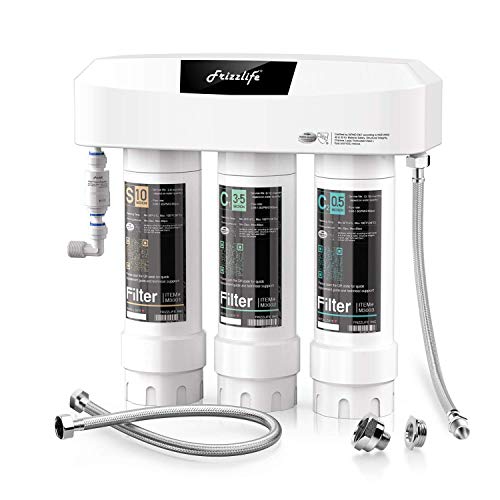
Frizzlife Under Sink Water Filter System
This direct-connect filtration system uses a multi-stage process to reduce chlorine, sediment, and improve taste without requiring a separate faucet. You can find it on Amazon.
View on AmazonAs an Amazon Associate, we earn from qualifying purchases.
5. Cloud RO Tankless Reverse Osmosis System with Remineralization
This tankless reverse osmosis system combines maximum contaminant reduction with alkaline remineralization, delivering clean water with improved taste and higher pH. The compact design eliminates the bulky storage tank while maintaining high flow rates, and the built-in remineralization stage adds back beneficial minerals that RO typically removes.
Why we recommend it: Provides RO-level removal of dissolved contaminants like lead, fluoride, and arsenic while restoring taste through mineral addition. The tankless design saves cabinet space and delivers water on demand without the flat taste common with standard RO systems.
Things to know: Requires drain line connection and dedicated faucet installation. Multiple filter stages mean more replacement cartridges to track and higher ongoing costs compared to simpler systems. Installation is more complex than non-RO alternatives.
6. NU Aqua Platinum Series Tankless RO System
This tankless reverse osmosis system includes additional treatment stages for comprehensive water processing. The system produces clean water on demand while eliminating the space requirements of traditional tank-based systems, fitting the tankless RO category for those wanting maximum removal without storage tanks.
Why we recommend it: Combines RO purification with additional treatment stages for comprehensive protection. The remineralization stage improves taste, and tankless design provides instant access to filtered water without the space requirements of tank systems.
Things to know: Higher upfront cost due to multiple treatment stages and tankless engineering. Complex system means more potential maintenance points and higher ongoing filter replacement costs.
How to Choose the Right Under-Sink Water Filter
- Test your water first: Understanding your specific contaminants helps determine whether you need RO-level purification or if a simpler system will suffice. Municipal water reports and home test kits reveal what you're actually dealing with.
- Consider installation requirements: RO systems require drain connections and often dedicated faucets, while non-RO systems typically connect directly to existing plumbing. Factor in your DIY comfort level and available cabinet space.
- Evaluate ongoing costs: RO systems have more filter stages to replace but often use standard, competitively priced cartridges. Non-RO systems may have fewer filters but sometimes use proprietary, more expensive replacements.
- Balance performance with convenience: RO provides maximum contaminant reduction but produces wastewater and requires more maintenance. Non-RO systems offer simplicity and high flow rates but may not address all water quality concerns.
- Plan for maintenance: All systems require regular filter changes to maintain performance. Consider systems with clear replacement schedules and easily available filters to ensure you'll keep up with maintenance.
The best under-sink water filter depends on your specific water quality issues and household priorities. RO systems excel at comprehensive purification but require more complex installation and ongoing maintenance, while non-RO systems offer convenience and high flow rates for addressing common taste and odor problems.