
Home Water Testing Kits: Lab Analysis vs DIY Strip Options
Water testing has become essential as contaminants like PFAS, lead from aging pipes, and bacteria in well water pose serious health risks. According to the EPA, contamination can occur between treatment plants and your tap through distribution lines and plumbing materials. Testing experts consistently highlight that the best kits balance accuracy, ease of use, and detection of important contaminants rather than simply offering the most parameters on the box.
1. Safe Home Ultimate Drinking Water Test Kit
This comprehensive kit tests for over 200 water quality parameters through EPA-certified laboratory analysis via mail-in submission. The kit includes collection vessels, prepaid shipping, and tests for metals, pesticides, volatile organics, disinfection byproducts, and bacteria including E. coli. Results are available online within 7-10 business days with detailed explanations of each contaminant.
Why it stands out: Good Housekeeping ranks it number one for accuracy and reliability, while testing experts praise its comprehensive scope covering everything from lead and arsenic to industrial chemicals. The kit includes 200 pages of water management guidance and expert customer support for interpreting results.
Things to know: This is the most expensive option on the market, and the technical language in results may require some navigation. The comprehensive nature makes it ideal for annual testing rather than frequent monitoring.
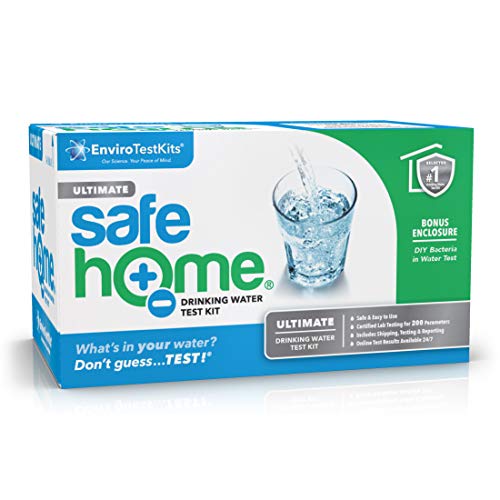
Safe Home Ultimate Drinking Water Test Kit
This comprehensive kit tests for over 200 water quality parameters through EPA-certified laboratory analysis via mail-in submission. You can find it on Amazon.
View on AmazonAs an Amazon Associate, we earn from qualifying purchases.
2. Tap Score Advanced Water Test Kit
This laboratory-based testing kit analyzes 114 parameters affecting water aesthetics, health, and plumbing through certified laboratory analysis. The kit includes three collection vials, sampling instructions, and prepaid shipping. A unique algorithm generates a standardized water quality score to help users understand results more easily.
Why it stands out: Testing experts highlight its balance of comprehensive analysis with user-friendly reporting, including specific recommendations for improving water quality based on your results. The standardized scoring system makes complex lab data more accessible to homeowners.
Things to know: Results take longer than test strips and cost more than basic kits, making it less suitable for frequent monitoring. The kit focuses on municipal and well water rather than specialized applications like pools.

Tap Score Advanced Water Test Kit
This laboratory-based testing kit analyzes 114 parameters affecting water aesthetics, health, and plumbing through certified laboratory analysis. You can find it on Amazon.
View on AmazonAs an Amazon Associate, we earn from qualifying purchases.
3. VARIFY Premium Drinking Water Test Kit
This test strip kit detects fluoride, alkalinity, iron, copper, mercury, nitrite, nitrate, hardness, aluminum, lead, sulfate, and bacteria including E. coli. The strips provide laboratory-grade accuracy for home testing with color-coded results that appear within minutes of testing.
Why it stands out: Water testing experts note its wide range of contaminants detected with reliable accuracy, offering a middle ground between basic strips and expensive lab analysis. The kit covers both chemical contaminants and bacterial testing in one package.
Things to know: Some users find the color chart results harder to interpret than digital readouts. The strips require careful handling to avoid color bleeding that can affect accuracy.

VARIFY Premium Drinking Water Test Kit
This test strip kit detects fluoride, alkalinity, iron, copper, mercury, nitrite, nitrate, hardness, aluminum, lead, sulfate, and bacteria including E. You can find it on Amazon.
View on AmazonAs an Amazon Associate, we earn from qualifying purchases.
4. JNW Direct Drinking Water Test Kit
This affordable test strip kit checks for 15 parameters including iron, copper, lead, fluoride, pH, total alkalinity, chlorine levels, hardness, nitrate, and nitrite. The kit includes 100 test strips with clear instructions printed directly on the bottle and a mobile app for tracking results over time.
Why it stands out: Testing reviewers consistently highlight its excellent value for basic water monitoring, with EPA standards marked directly on the bottle for quick reference. The included mobile app and digital guide provide additional guidance for improving water quality.
Things to know: This kit does not directly test for bacteria, though it does check for nitrates and nitrites which can indicate bacterial presence. Results are less detailed than lab analysis but sufficient for routine monitoring.
5. Health Metric Well Water Test Kit
Specifically designed for private well water testing, this kit checks for lead, copper, iron, and other common well water contaminants using easy-to-use test strips. The kit provides fast results and clear instructions, making it suitable for routine monitoring or testing after storms.
Why it stands out: Well water experts recommend it for its focus on contaminants most relevant to private wells, with simple instructions that make regular testing manageable for homeowners. The fast results allow immediate assessment of water safety after weather events or system changes.
Things to know: The kit tests fewer parameters than comprehensive lab kits, focusing specifically on well water concerns rather than providing broad-spectrum analysis. It works best as part of a regular monitoring routine rather than a single comprehensive assessment.
How to Choose the Right Home Water Testing Kit
- Match your water source: City water users should focus on lead, chlorine, and disinfection byproducts, while well water requires testing for bacteria, nitrates, and naturally occurring contaminants like arsenic.
- Consider testing frequency: Test strips work well for regular monitoring, while lab kits provide the most comprehensive annual assessment. PFAS testing specifically requires certified laboratory analysis as no home kit can detect these compounds yet.
- Check detection limits: For critical health contaminants like lead, ensure the kit can detect levels near EPA action limits rather than just providing present/absent results.
- Evaluate ease of interpretation: Some kits provide color-coded strips while others offer detailed lab reports with explanations. Choose based on your comfort level with technical information.
- Budget for your needs: Basic strips cost $5-20 for routine checks, while comprehensive lab analysis ranges from $200-600 but provides the highest confidence for health decisions.
Regular water testing protects your family's health by identifying invisible contaminants before they become problems. Start with your water source and health priorities, then choose a testing approach that fits your budget and monitoring needs.